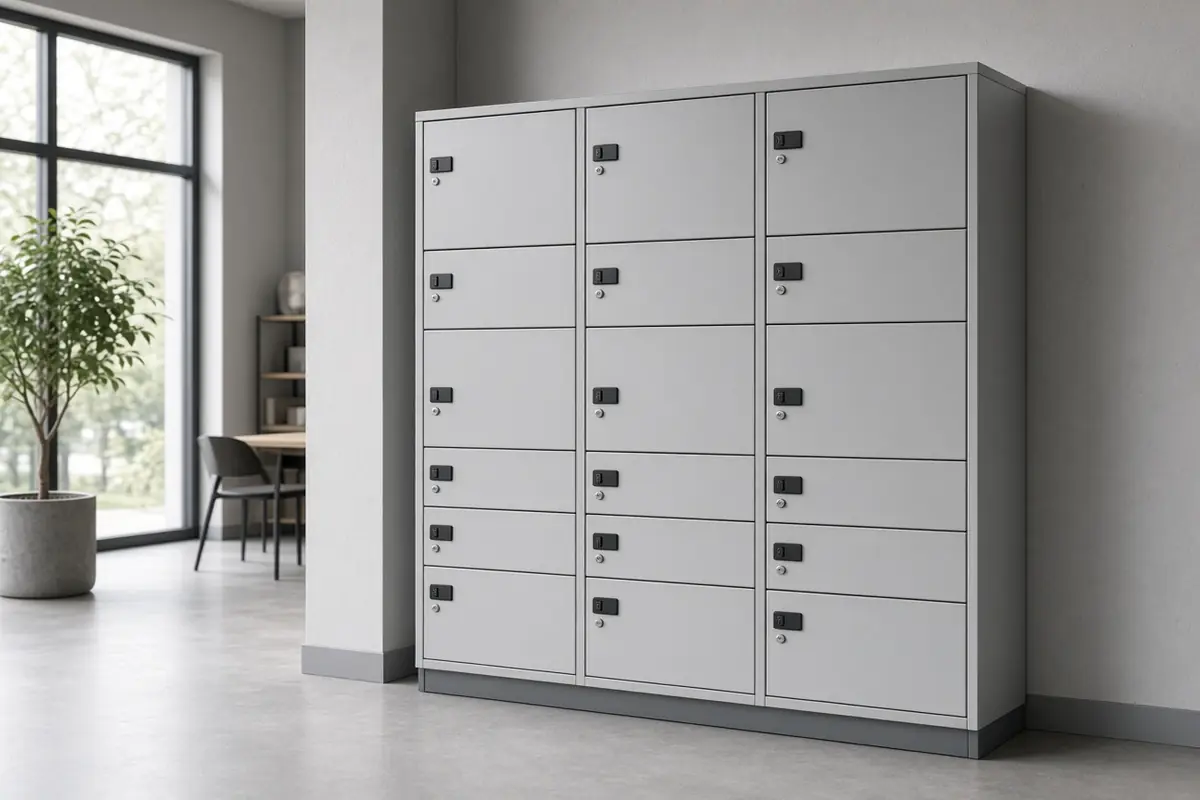
A wall of doors does not, by itself, tell staff where an order is, who owns a failed collection, or whether the aisle still works at busy hour. Separate the metal cabinet from the order path.
Count doors you can see, write the failed-pickup rule, and measure the aisle yourself. No width, height or parcels-per-hour figure is given, because no manufacturer sheet was read on 14 October 2026. Publishing a guessed dimension would imply a test this site did not run.
What to write next to the cabinet
- How many doors are in the bank you are considering, counted on a drawing or on site, with the date of the count?
- Which system tells a customer which door to open, and what they do if the code fails?
- How long an uncollected parcel stays, and who returns it?
- Is the standing space clear of the loose mats and wet patches that slip guidance is written to address?
The UK Health and Safety Executive slips index, opened 14 October 2026, is the pointer for that last question. It is an index of causes, roles and cost of accidents. It does not rate locker hardware.
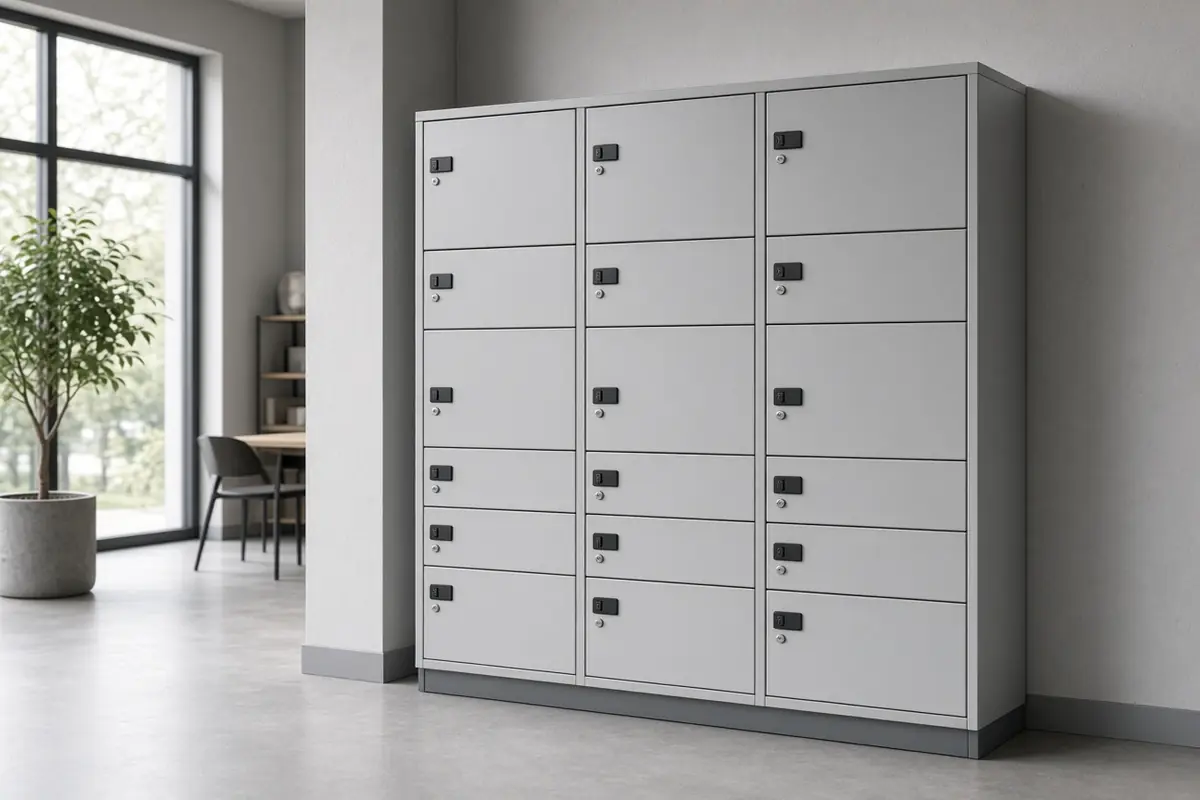
The picture is an example of a plain grey cabinet. It shows no logo and no on-screen payment brand. It is not a client’s back room.
Staffed self-service, where a person still finishes a failed payment, is the neighbouring list: checklist before self-service. Both sit in retail technology.

Measure the aisle with a tape on the day you visit the premises, and write that number in your own note. This page still will not copy it into a specification, because a single aisle is not a product claim.
Method and sources
Original questions. HSE slips index, 14 October 2026. No hardware brochure. Updated October 2026.