Owners get misled when a blog prints a “typical” rent and calls it a model. Copy the numbers from your own papers, and leave a cell blank when the paper is missing.
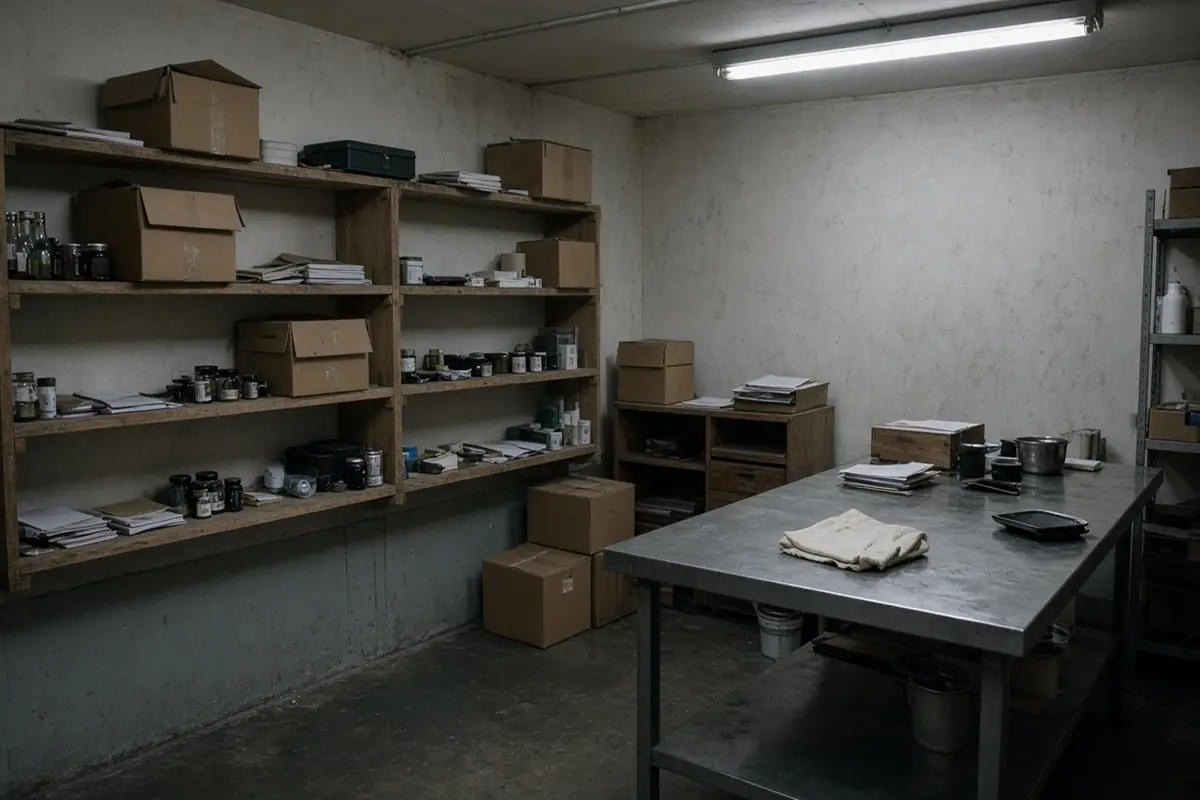
Copy occupancy, labour, energy, and shrink from the papers named in the table, and date each figure. The box below says which paper each line uses. Nothing here is a New York statutory rate, and the worksheet is not a forecast.
What each line means. Occupancy means the figure on the current lease, dated by you. Labour means payroll you already run, not a national average. Energy means the utility bill in front of you. Shrink and upkeep are separate lines so they are not buried inside rent.
| Line | Copy from | Leave blank if |
|---|---|---|
| Occupancy | Current lease, with its date | You are between leases |
| Labour | Your payroll for a stated month | Hours are not recorded |
| Energy | Utility bill for a stated meter | The bill mixes two units |
| Shrink and upkeep | Your count of loss, plus repair invoices | Those records are not kept |
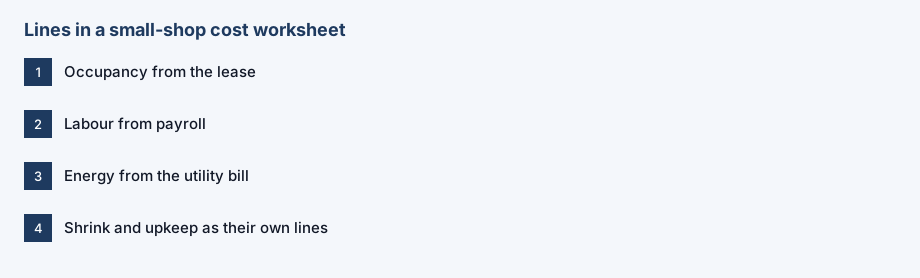
The back-room photograph shows shelves and a metal table in a work room. The Health and Safety Executive slips index includes a section on what those accidents cost to people and to employers. Keep that guidance next to the upkeep line when a slip changes the repair invoices.
Vendor questions that affect upkeep invoices are in the service checklist, while monthly rooftop HVAC filter changes (ASHRAE 180), ADA §404 door closer checks, and NFPA 101/10 life-safety audits that keep utility and repair bills predictable are scheduled in our store maintenance checklist: monthly HVAC, lighting, doors, and refit triggers. The parent is operations. This is not financial advice and not a forecast.
Method and sources
Health and Safety Executive, Slips and trips. Updated October 2026.